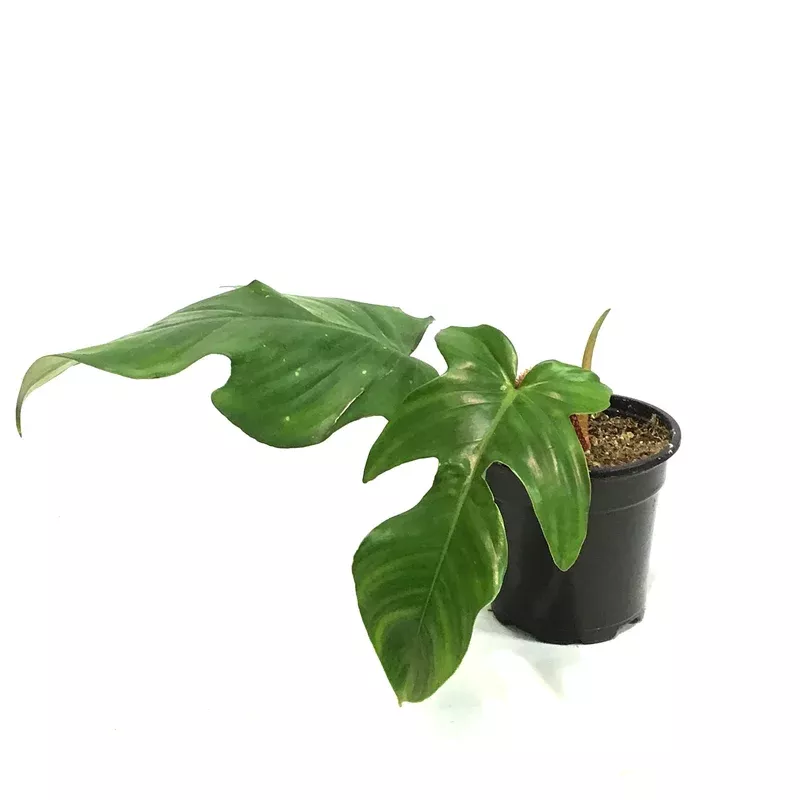
The Philodendron Squamiferum, or the “hairy” Philodendron, is a rare species of the Philodendron family, and can be hard to find. Loved for its red hairs and pretty foliage, it is easy to care for, making it a popular choice for Philodendron lovers.
If you need any more photos or additional information on this product, send us a message using the chat button on our website with the product name, and we will get back to you as soon as possible.
This plant has a representative product photo and the item you will receive may not be exactly as shown.
Attributes
Type:Tropical Height: 12 in – 36 in Spread: 12 in – 18 in Light: Medium to Bright Indirect Water: Regular Zone: 9 – 11 Pet Safe: Very Toxic!
Care
General Maintenance: This hair plant, though a slow grower, can take up a lot of space. If your plant seems not to be growing as well as it was or is drying out quicker than usual, it is time to repot it. A larger pot will be best.
Temperature:10 to 25 degrees Celsius is best. Keep away from cold air drafts or direct fans.
Light: It is best to keep these tropical plants in a medium to bright indirect light. In the summer, a spot with partial shade is perfect. As a general rule, avoid extremes with this Philodendron.
Watering: The Philodendron Squamiferum loves water, but overwatering can lead to fungal infections. Make sure the top 3 centimeters of its soil are dry before watering. The soil needs to remain moist, but not soggy. During hot growing seasons, it needs to be watered once a week, but during cooler seasons it may only need watering once every two weeks.
Soil: A soil that is organic and nutrient rich is best, ensuring that it is not too dense. A well draining pot is also important.
Fertilizer: The Philodendron Squamiferum is a slow growing plant that doesn’t require much food. During the growing seasons, add a little bit of fertilizer about once every 1 to 1.5 months.