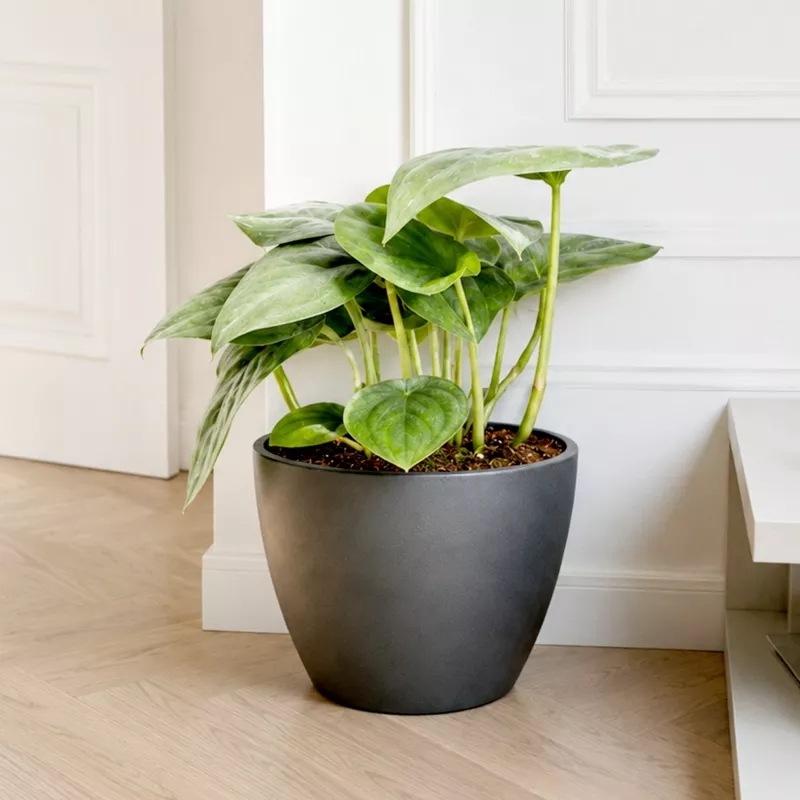
Scindapsus Platinum Java is a rare trailing aroid in the family Araceae, native to the tropical forests of Southeast Asia, where it climbs trees and scrambles across the forest floor in warm, humid conditions. It belongs to the same genus as the widely grown scindapsus pictus group, prized by collectors for its unusually heavy silver coverage across each leaf.
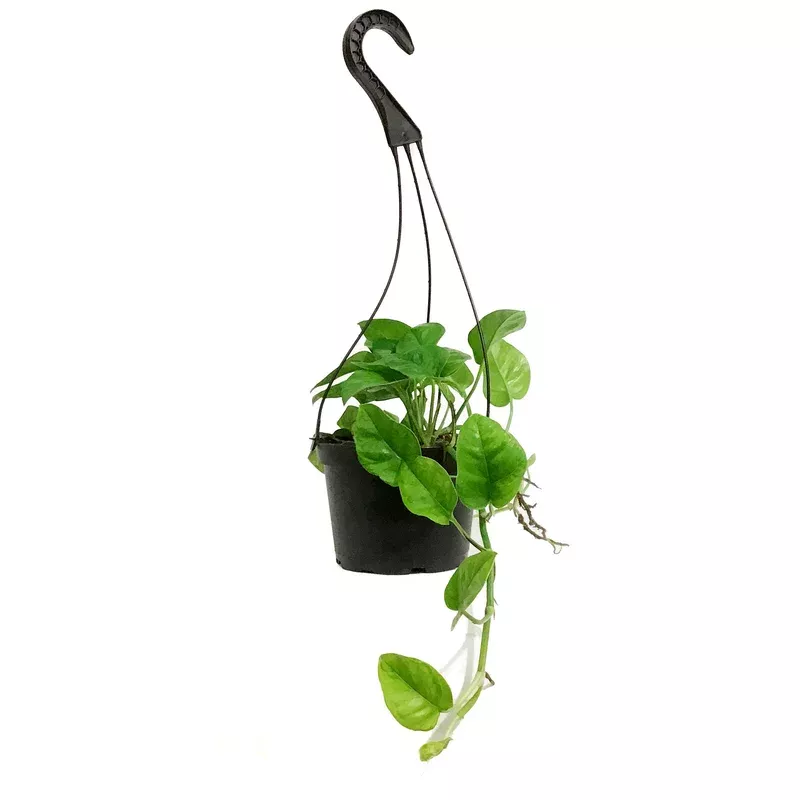
The leaves are heart-shaped and moderately sized, with a matte, almost velvety surface. Nearly the entire leaf face is washed in a cool platinum-silver, leaving only faint traces of the underlying green visible toward the edges and midrib. The stems trail and extend readily, and each node along the vine is capable of putting out new growth when conditions are right.
Scindapsus species rarely flower indoors, and Java is no exception under typical household conditions. Worth noting instead is how it responds to its environment: the leaves can show subtle shifts in the depth of their silver coverage depending on available light, with lower light pulling the silver tones back toward a softer, more muted finish.
A hanging hook lets the vines trail downward freely, and Java stays comfortable near a kitchen where ambient moisture stays higher than in other rooms. Rotate it every couple of weeks so each side receives even light exposure. It is sensitive to air from AC vents and heating units, so position it away from direct airflow. Cats, dogs, and small children should not have access to the leaves or sap, as contact with the sap can irritate skin and paws, and the plant should not be nibbled or ingested. Place it on a high shelf or in a hanging planter well out of reach.
Scindapsus Platinum Java grows well under bright indirect light, including standard office LED setups. South-facing windows can scorch the leaves, so an east or west exposure works best.
Water it every 10-14 days, allowing the top inch or two of soil to dry between sessions. It wilts slightly when dry, and overwatering leads to yellowing leaves and root rot.
Java does best in a well-draining aroid mix, combining perlite, orchid bark, and a quality potting base. Good drainage at the root zone prevents the moisture buildup that leads to rot.
It prefers temperatures between 65F and 85F and should not be exposed to anything below 55F. Cold drafts, heating vents, and air conditioning airflow all affect it negatively.
Java is a slow to moderate grower, putting out new leaves more steadily with consistent warmth and humidity. Feed with a balanced liquid fertilizer once a month during the spring and summer growing season.
It is hardy in USDA zones 10-12, where frost is rare and temperatures stay above 55F through the year. It grows outdoors year-round in Hawaii, southern Florida, and parts of southern California and coastal Texas. In cooler states, it can move outside for summer months before temperatures drop in autumn.
Q: Is Scindapsus Platinum Java safe for pets? A: Cats and dogs shouldn’t be left to nibble or eat the plant. The sap can also irritate skin and paws on contact, so keep it on a high shelf or in a hanging planter well out of reach.
Q: Why are the leaves turning yellow? A: Scindapsus Platinum Java most often shows yellow leaves from overwatering or exposure to cold drafts from AC or heating vents. Check that the soil has dried adequately between waterings and that the pot is positioned away from direct airflow.
Q: How much light does Java need? A: An east or west-facing window is the sweet spot. South windows push too much direct sun through and can bleach or scorch the leaf surface, while a spot a few feet back from a bright window tends to work well.
Q: How do I propagate this plant? A: Take a stem cutting with at least one node and one leaf, then place it in water or moist sphagnum moss until roots develop. Java roots reliably from node cuttings, and new growth typically appears within a few weeks under warm, humid conditions.
Q: Can Java survive while I travel? A: It wilts visibly when the soil has been dry too long, which is the clearest sign it needs water when you return. Most short trips of up to ten days fall within a normal watering window without any special preparation.
Q: What humidity level does this plant need? A: Java prefers humidity above 50%. Near a kitchen or bathroom where ambient moisture is naturally higher works well, or a humidifier placed nearby keeps the leaves looking their best.